

Your next customer is not going to Google you. They are going to ask an AI. And if that AI does not mention your brand, you have already lost the deal before it started.
This is not a prediction. It is happening now. Research from 6sense found that 94% of B2B buyers used large language models during their buying journey in 2025. A separate study by EMARKETER forecasts that nearly a third of the US population will use generative AI search in 2026. The buyers you want to reach are forming shortlists inside AI conversations, not search results pages.
So the question is no longer whether AI citations matter. It is how you earn them.
Each platform retrieves differently. Your strategy should, too.
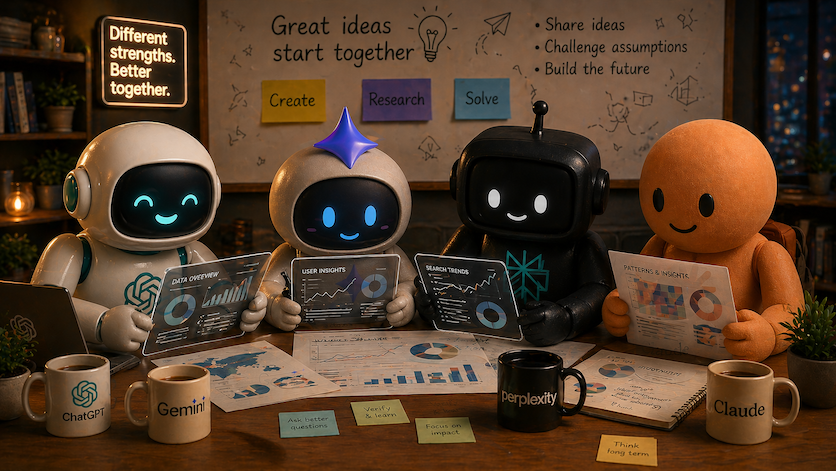
One of the biggest mistakes we see marketing teams make is treating AI search as a single channel. It is not. Each platform pulls from different sources, weights different signals, and cites content for different reasons.
Yext Research analysed 17.2 million AI citations across industries and found clear differences in how each platform selects sources. Gemini leans heavily on Google’s search index. If your brand has strong traditional SEO foundations, structured pages, and a well-maintained Google Business Profile, you are more likely to appear in Gemini’s responses. It behaves closest to the Google search logic most marketers already understand.
ChatGPT takes a different route. Its browse mode relies on Bing for real-time retrieval, which means your Bing rankings directly influence whether your content enters ChatGPT’s consideration set. If you have never checked your Bing Webmaster Tools, now is the time.
Perplexity operates as a research-first answer engine. It cites the most sources per response (averaging nearly 22 citations per answer, according to a Qwairy analysis of 118,000 AI responses from early 2026) and is highly responsive to content freshness. If your content was updated within the last 30 days, Perplexity is significantly more likely to cite it.
Claude is the outlier. The same Yext study found that Claude cites user-generated content at two to four times the rate of other models. Reviews, community discussions, and third-party validation carry outsized weight in Claude’s ecosystem. If your brand has a thin review presence or limited mentions on platforms like Reddit, LinkedIn, and industry forums, Claude is unlikely to surface you.
The content traits that actually get cited
A Search Engine Land analysis of ChatGPT referral traffic across 15 domains found that the single strongest predictor of citation was the presence of what researchers call an “answer capsule”: a concise, self-contained explanation of roughly 20 to 25 words placed directly after a heading framed as a question. Across the dataset, 72.4% of pages that earned ChatGPT citations included one.
The second strongest signal was original data. Pages featuring proprietary statistics, first-party research, or branded insights consistently showed higher citation rates. This makes sense when you think about it from the AI’s perspective: it needs something specific and attributable to reference. Generic advice gives it nothing to anchor a citation to.
This principle holds across all four platforms. Content that leads with a direct answer, supports it with named and dated evidence, and structures information under clear, question-based headings is the content that gets extracted and cited.
Six things you can do this month
1. Audit your top pages for answer capsules. Review your highest-traffic content. If a clear, 20 to 25 word answer does not appear immediately after your main heading or H2, add one. This single change is the fastest path to improving your citation potential across ChatGPT and Perplexity.
2. Check your robots.txt. Make sure you are not accidentally blocking AI crawlers. GPTBot, OAI-SearchBot, ChatGPT-User, ClaudeBot, PerplexityBot, and Google-Extended all need explicit access. One misconfigured line can make you invisible to every AI platform simultaneously.
3. Publish original data. Run a survey. Analyse your client results. Benchmark your industry. AI models are looking for specific, verifiable facts they can attribute. If you publish a stat that nobody else has, you become the only source they can cite for it.
4. Get your Bing house in order. Submit your sitemap to Bing Webmaster Tools. Check which pages rank in Bing’s top 10 for your target queries. ChatGPT’s browse mode cannot cite pages it cannot find in Bing’s index.
5. Build your presence on third-party platforms. Brands are 6.5 times more likely to be cited through third-party sources than through their own domains. LinkedIn, Reddit, YouTube, industry directories, and review platforms all feed into how AI models assess your authority. A brand that only exists on its own website is a brand AI cannot verify.
6. Keep content fresh. Perplexity shows an 82% citation rate for content updated within the last 30 days. Add a visible “Last updated” date to your key pages and commit to refreshing your most important content monthly.
The bigger picture
AI citation is not a bolt-on tactic. It is the natural result of doing the fundamentals well: creating genuinely useful content, structuring it clearly, backing claims with evidence, and being present across the platforms your buyers trust.
The brands winning in AI search right now are not gaming a new algorithm. They are the same brands that have been building authority, publishing original thinking, and earning trust across multiple channels for years. AI is simply making that effort more visible and more measurable than ever before.
The difference in 2026 is that you can no longer afford to do this slowly. Your competitors are already being cited. The question is whether your brand will be in the conversation or watching from the outside.
GKJ Consulting helps B2B brands build visibility across search and AI platforms. If you want to know where your brand stands in AI search right now, get in touch: nick@gkjconsulting.co.uk