

Most marketing budgets contain a silent structural flaw. Paid search, organic, and earned media are each delivering results in isolation, but working against each other where it counts. Here is what that costs, and how to fix it.
Most marketing teams are good at their individual disciplines. The paid search team knows its platforms. The SEO team understands its rankings. The PR team has media relationships that generate genuine coverage. The problem is not competence. It is architecture. When these three functions operate independently, with separate briefs, separate KPIs, and separate agency relationships, the output is not the sum of three strong channels. It is three channels undermining each other in ways nobody in the room has been asked to measure.
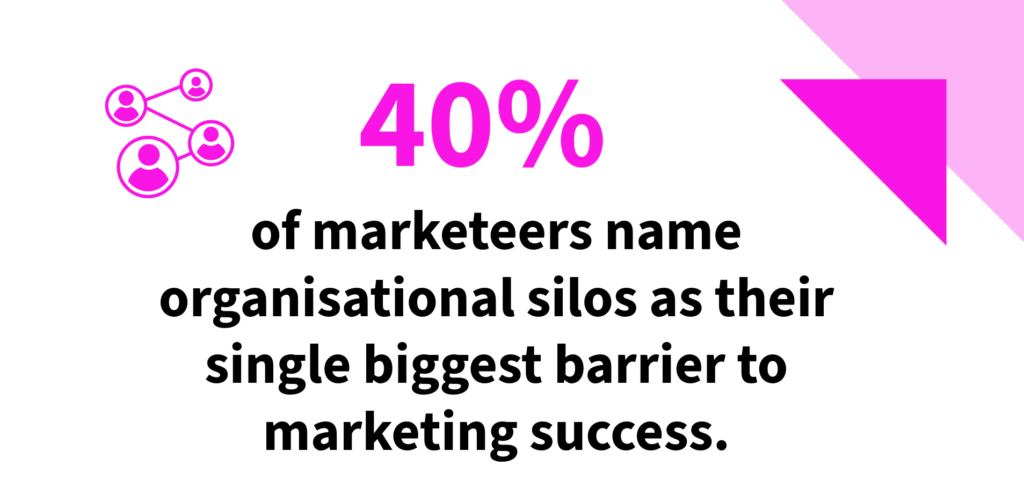
This is not a minority concern. Research published in late 2025 found that 40% of marketeers name organisational silos as their single biggest barrier to marketing success. Not budget. Not talent. Not technology. The walls between their own teams. And the consequences are financial, structural, and increasingly urgent given how search itself is changing.
Where the money disappears
The most straightforward cost of siloed thinking is keyword cannibalism. When a paid search team bids on terms for which the business already holds strong organic positions — and this happens constantly when the two teams have no shared visibility — the brand pays for clicks it would have captured for free. At scale, and in a market where cost per click rose across 87% of industries in 2025, this is not a minor inefficiency. It is a structural tax on the paid budget with no benefit to the overall business.
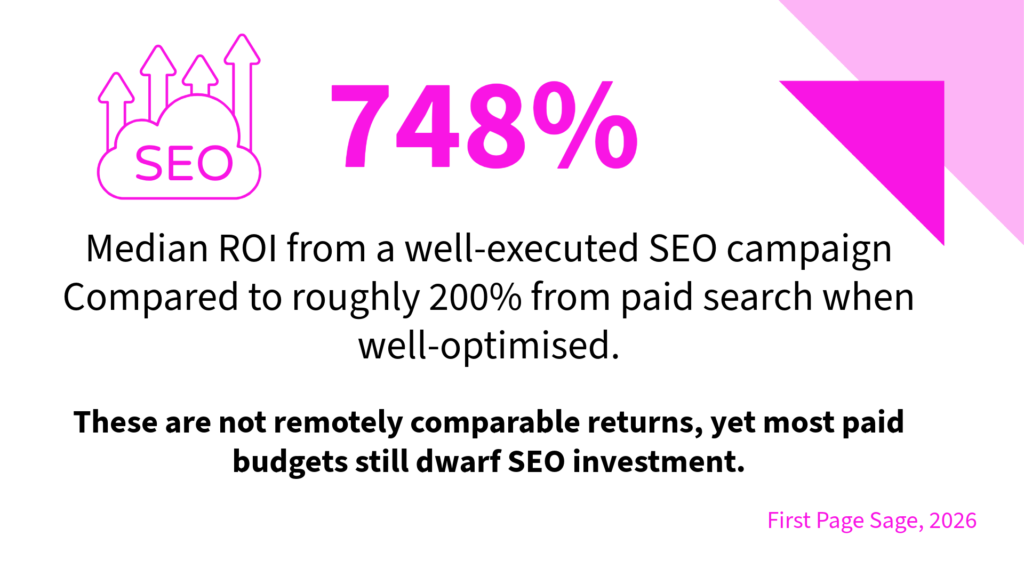
The ROI gap between organic and paid search is stark and well-documented. A well-executed SEO campaign returns a median of 748%, approximately £7.48 for every £1 invested, while paid search averages around 200%. The reason most organisations still favour paid is speed: ads produce traffic immediately, SEO takes 6 to 12 months to deliver meaningful returns. That is a legitimate planning consideration. It is not a reason to treat the two channels as unrelated, or to allow paid spend to erode the organic asset that generates far higher long-term return.
The second hidden cost is messaging inconsistency. When your paid ad promises one outcome, your organic landing page frames it differently, and your PR narrative positions the brand in a third way, buyers do not resolve the contradiction in your favour. They disengage. In a B2B context, particularly, where buying decisions involve multiple stakeholders conducting independent research across multiple touchpoints, inconsistency reads as disorganisation. It erodes exactly the trust the PR investment was intended to build.
Why PR has become an SEO asset you cannot afford to waste
Of the three disciplines, PR is the most routinely disconnected from the others — and the most consequential to neglect right now. Earned media in respected publications generates the domain authority signals that determine whether SEO investment delivers returns at all. Editorial coverage from credible sources is one of the primary inputs that Google and emerging AI search platforms use to assess brand authority. When PR teams work separately from SEO teams, that coverage is routinely squandered: links go uncaptured, anchor text is an afterthought, and the story told in the trade press bears no relationship to the keyword strategy the organic team is building around.
The AI search dimension makes this integration urgent rather than simply desirable. Google’s AI Overviews, which now appear in a meaningful proportion of search results, and the growing influence of ChatGPT Search, surface brands based on authority signals and editorial citations, not just on-page optimisation. The brands that AI surfaces as credible answers are the brands with the strongest earned media footprint, aligned with strong organic content. PR and SEO working separately means neither discipline is feeding the signals that determine AI visibility. That is a competitive gap that will compound year on year.
How to unify the three disciplines in practice
Integration does not require restructuring. It requires three specific changes to how the work is planned, briefed, and measured.
1.) Build one keyword and content strategy, not three.
The paid team’s keyword data is the most valuable, real-time signal in the building. It tells you exactly which search terms convert, at what cost, and with what message. That data should directly inform the organic content calendar and the angles the PR team pitches to the press. A single master document, owned by whoever leads marketing strategy, that maps keyword themes to content formats to PR narratives, is the starting point. This is a planning discipline, not a technology investment.
2.) Protect your organic positions from internal paid competition.
Before running any paid campaign, cross-reference your target keyword list against your current organic rankings. Where you already hold positions one to three organically, you should not be paying to appear above yourself. Redirect that budget to terms where you have no organic presence and where paid genuinely expands your reach. This single audit, conducted quarterly, typically yields a meaningful budget without reducing total search visibility.
3.) Time PR activity to reinforce paid and organic campaigns.
PR coverage does not exist in isolation from the rest of your marketing. A feature in a respected trade title, timed to coincide with an active paid campaign on the same topic, creates an authority halo that improves ad quality scores, increases organic brand search, and reinforces the message the buyer is encountering across multiple touchpoints. The content the PR team secures coverage for should be the same content the SEO team has optimised, and the paid team is driving traffic to. This is not complex coordination. It is a shared editorial calendar and a weekly conversation between channel leads.
4.) Replace channel KPIs with a total search framework.
Separate KPIs produce separate, and sometimes competing, behaviours. When the paid team is measured on cost per click, the SEO team on rankings, and the PR team on coverage volume, none of them has any incentive to coordinate or to avoid duplication. A total search approach measures combined organic and paid share of voice for priority terms, total revenue attributed to search as a category, and the incremental contribution of each channel to that figure. This shared measurement model aligns behaviour at the reporting layer, which is where commercial decisions are actually made.
The compounding return from getting this right
The case for integration is not just about stopping the waste, although that alone is significant. It is about the compounding advantage that builds when these three disciplines reinforce each other. PR coverage earns backlinks that strengthen organic authority. Strong organic authority reduces the cost of paid clicks by improving quality scores and reducing competition for branded terms. Paid search data sharpens the keyword and messaging strategy that makes both PR pitches and organic content more effective. Each channel makes the others more efficient. That is precisely the dynamic that siloed operation prevents.
The brands that will dominate search visibility over the next three years, across traditional Google results and the AI-powered surfaces that are reshaping how buyers find information, will be the ones that treat paid, organic, and earned as a single connected system. The organisations still running them as separate workstreams are not just leaving performance on the table. They are funding their own inefficiency, quarter after quarter, while the gap between them and their more integrated competitors quietly widens.
GKJ Consulting helps B2B brands build integrated marketing strategies across acquisition, organic growth, and earned media.
If your paid, SEO and PR activity currently runs in separate workstreams, we would welcome a conversation about what a unified approach could deliver.