

A clear position from the outset. At GKJ Consulting, we are advocates of AI in marketing. We use it. We recommend it. We see it deliver real commercial outcomes for clients every quarter. But our position is unambiguous on the question that matters most. AI should be used because it is fit for purpose, never because it is fashionable, and it should always sit in the hands of a human marketer as a tool, not as a replacement for one.
The Duke Fuqua CMO Survey, fielded in January 2026, captures the moment well. AI now drives roughly a quarter of all marketing activity, with generative AI alone more than tripling in two years, and marketers reporting modest but real uplift in sales productivity and customer satisfaction (Duke Fuqua, CMO Survey, Feb 2026). The warning in that same survey is the one that frames most of our advisory work. Adoption is outpacing organisational readiness. Investment is racing ahead of governance, judgement and skills, and that is where the value is leaking.
Here is what we see earning its keep, and where the money is quietly disappearing.
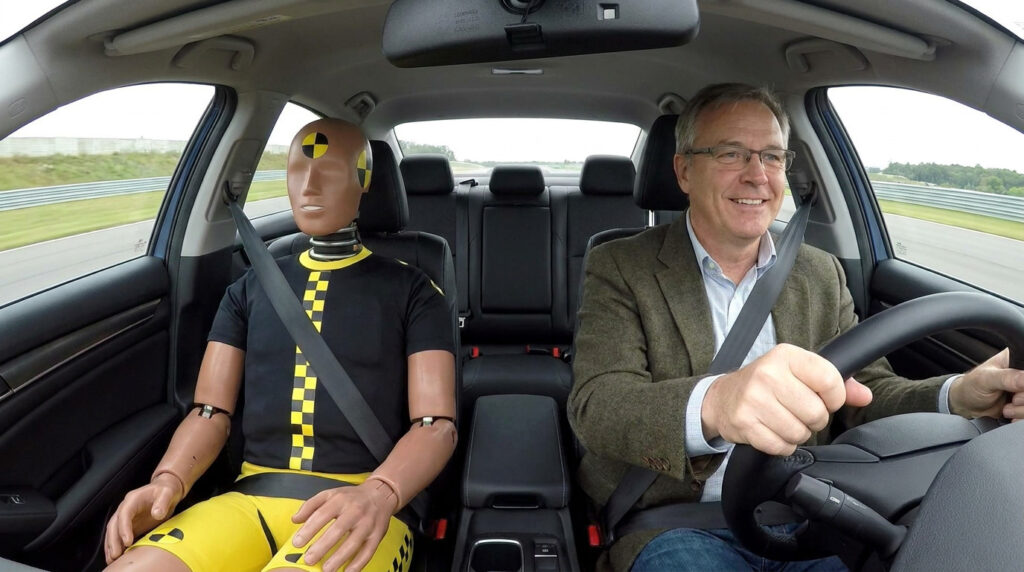
Where AI earns its place, with a human at the wheel
Content creation, when the brief and the edit stay with a marketer.
Of all the AI use cases, this is the one most marketers are getting visible value from. HubSpot’s 2026 State of Marketing report, drawn from more than 1,500 marketers, shows content creation as the most common heavy use of AI in marketing, with 56% of marketers significantly revising AI-generated text or rewriting it, and a further 38% making minor edits before publishing (HubSpot, State of Marketing 2026). The marketers getting value here are not handing the keys over. They are using AI for the boring 60% of the job: outlines, first drafts, alt text, repurposing, translation, briefing notes, and social variations.
“In our own client work, the pattern is consistent. AI-assisted briefing and drafting can cut content production time by a third or more, but the commercial impact only shows up after a marketer has rewritten the angle, sharpened the proof points, and got the tone right.”
Think of AI as the worst publisher you will ever hire. Brief it like a junior, edit it like an editor, and your output goes up without your quality going down.
AI imagery and video, with brand and legal guardrails.
Imagery and video is the fastest-moving AI area in marketing right now, and the one where human governance matters most. HubSpot’s 2026 data places media creation as the second most common heavy AI use case in marketing, just behind text content. Independent industry data shows AI-generated video ads delivering meaningfully higher click-through rates than traditional production, and around three-quarters of marketing teams now use AI-generated video in at least one campaign per quarter (Vivideo, AI Video Statistics 2026).
The upside is real. AI-generated and AI-assisted imagery and video collapse the cost of producing creative variants, social cuts, localised versions, and concept tests.
In our client work, creative production costs drop substantially on campaigns where the brief, the brand reference assets, and the approval workflow are tight before a single image is generated. We have written more about this here: https://gkjconsulting.co.uk/ai-generated-video-for-product-marketing-is-it-right-for-your-brand/
Where most marketing teams are under-prepared in 2026 is the exposure side. Two issues matter.
First, provenance and copyright. The US position remains that works without a human creator are not eligible for copyright protection, after the Supreme Court declined to hear the Thaler appeal in March 2026 (Built In, AI and Copyright). Tools also differ sharply on commercial safety. Adobe Firefly is trained on licensed content with enterprise indemnification. Sora and several others have less transparent provenance and carry more residual risk for brand teams in regulated sectors.
Second, disclosure. From 2 August 2026 the EU AI Act, Article 50, imposes clear labelling obligations on deepfake and AI generated image, audio and video content where it resembles real people, places or events (Bird & Bird, GenAI and IP). For any UK or European brand running paid social, influencer or organic video, this is now an operational compliance matter, not a theoretical one.
The practical takeaway is consistent with the rest of this article. Use the tools. Take the production cost savings. But put a human in charge of brand consistency, IP sourcing, disclosure compliance and final sign-off. Generative imagery and video are powerful precisely because they are fast and cheap. That is also what makes ungoverned use commercially and legally expensive.
Email personalisation and behavioural segmentation.
Email may be the most under-discussed AI win in marketing right now. Salesforce benchmark data suggests AI-driven email programmes produce around 40 percent more revenue than equivalent manual campaigns (Digital Applied). Email is data-rich and closed loop, which is exactly the environment in which machine learning earns its keep. The caveat we see in practice is unglamorous. Most of that uplift only arrives once a marketer has cleaned the underlying data, defined the segments, and given the model a proper offer to work with.
Where the money is leaking:
Handing paid media over to AI on autopilot.
We see the most expensive mistakes here, inside otherwise capable marketing teams. AI-driven bidding inside Meta Advantage+, Google Performance Max, and the equivalents is useful. It is not a strategy, and it is not a substitute for a media planner.
The case for caution is in the data. Wicked Reports’ analysis of more than 55,000 Meta campaigns found new customer acquisition cost on Advantage+ more than doubled year on year in 2024 to 2025, while manually managed campaigns held broadly steady (IMM Digital, June 2025). That gap is not a flaw in the technology. It is a predictable consequence of how it works. AI bidding optimises against the easiest available signal, which is almost always your existing audience. Left alone, it harvests warm demand, calls it acquisition, and disguises a remarketing budget as a growth budget.
We see this pattern repeatedly in audits. A client convinced they are acquiring new customers at scale, until the underlying conversions are decomposed and the bulk turn out to be retargeted warm prospects, existing customers or branded search intent. The fix is not to switch the tools off. The fix is to put a human in front of them. A marketer who controls audience exclusions, creative testing, attribution definitions, and the actual definition of a new customer.
Vendor sold AI agents bolted onto an unready stack.
Gartner’s October 2025 survey of martech leaders found that 45 percent say existing vendor-offered AI agents are failing to deliver the promised business performance, with half citing the absence of a clean data foundation as the blocker (Gartner, October 2025). Most of the organisations we work with do not have an AI problem. They have an integration, data hygiene, and adoption problem dressed up as one.
Treating AI as a headcount replacement.
Klarna’s public repositioning on AI-led customer service highlighted the limits of automation in complex customer interactions. The company moved aggressively to replace human service roles with AI in 2024, then softened its position in 2025 when service quality on more nuanced cases did not hold up, and it began rehiring into a hybrid model (Entrepreneur). AI handles volume well. Humans handle nuance, escalation, and the moments that define a brand. Most organisations get the most from a deliberate mix of the two, not from a winner-takes-all bet on either.

Treating organic search the way it used to work.
Ahrefs’ February 2026 update, analysing 300,000 keywords against December 2025 Search Console data, found a 58 percent reduction in click-through rates on top ranking pages where Google’s AI Overviews appear (Ahrefs, February 2026). Press Gazette, citing Chartbeat data, reported global publisher traffic from Google fell roughly a third in the year to November 2025 (Press Gazette). For many businesses, the implication is straightforward. Briefing content teams purely to rank for keywords and harvest clicks is becoming an expensive strategy. The work increasingly sits as the source the model cites, not only the link the user clicks. In practical terms, we are restructuring client articles around quotable definitions, proprietary observations and citation-friendly statistics, because AI summaries disproportionately surface concise, authoritative phrasing they can lift cleanly into an answer. We have written more about this here: https://gkjconsulting.co.uk/how-to-get-cited-by-chatgpt-gemini-perplexity-and-claude/
Where to focus
Many enterprise-wide AI transformation claims still outpace measurable commercial outcomes. The wins we see consistently come at function level, from teams treating AI as leverage on the work a skilled marketer is already doing, not as a substitute for the marketer.
AI delivers measurable uplift where three conditions hold. Clean first-party data. A clearly defined commercial metric. A human owning brief, judgement, brand, and final quality at the top of the funnel. If a tool, agent or platform cannot satisfy those three tests, the safer assumption is that it is not fit for purpose yet, no matter how confidently it is sold.
At GKJ Consulting, our view is that the right question for any 2026 marketing budget is not “which AI tool”. It is “which decision are we trying to make faster and better, do we have the data to teach the model to make it, and who is the human accountable for the outcome”. Answer those three honestly, and AI becomes the most useful colleague your marketing team has ever had. Skip them, and AI becomes the most expensive noise on your P&L.
If you would like a brief independent view of where AI is earning its keep in your marketing operation, and where a human needs to be put back in the driving seat, get in touch with GKJ Consulting.